From Fear
To Cooking
Kitchen &
Chemistry
Reactions
Confidence
Project Type
Design for VR, User Testing, XR, Virtual Reality
Project Timeline
2 Month
Software Used
Unity, Oculus Quest, Figma, Visual Studio
Overview
Cooking is emotional, it’s messy, intuitive, and deeply human.
What if we told you that cooking is, in fact, chemistry? If people could see the foundation of how their food is cooked, they would cook with more confidence and curiosity. Inspired by the spirit of “Lessons in Chemistry”, Kitchen Reactions is an immersive Extended Reality experience that invites you to pull back the curtain on this delicious science. Our goal is to transform users' kitchen experience into a vibrant, sensory laboratory where every stir, sizzle, and atom reveals the unseen molecular ballet that creates the flavor we adore.
Imagine not just following a recipe, but understanding the why behind every what. Guided by Madame Zott, your virtual culinary expert, users don’t just cook, they discover. This isn’t just about making a meal, it’s about igniting curiosity, fostering confidence, and deepening our connection to food, culture, and the interesting world of science.
Final Iteration
Title
Why cooking can feel like a mystery ?
Our journey began with a simple observation
Most people depend heavily on YouTube tutorials, pause recipes every few seconds, and second-guess every step. Users often don’t understand why a dish turned out perfectly
Or catastrophically.
Budding chefs, curious students and anyone with a passion for food
These are individuals who love the idea of creating culinary discoveries but often find themselves in dilemmas like
Cannot understand with recipe with videos
Traditional recipes and videos show them the steps, but rarely explain the fundamental reasons for things being done a certain way.
Scared to experiment
Learners are afraid of failure and afraid to experiment.
Missing the culture
Recipes are often presented as mere steps without the vibrant culture they originate from.
How might we make cooking feel understandable rather than intimidating?
We faced some challenges during ideation
Challenges that emerged during our ideation phase:
Chemistry is abstract: Just listening or reading about reactions doesn’t help when you’re staring at onions in a pan.
Tutorial overload the user: Video-based learning is too fast or lacks personalization
Beginners want a guide, not instructions: Users crave reassurance, feedback and the feeling that someone knowledgeable is beside them.
Why VR?

With these challenges in mind we turned to Extended Reality, specifically Virtual Reality. We chose VR because it’s capable of creating real time immersive, hands-on learning environments that traditional mediums simply cannot replicate. Why was VR an essential ingredient?
VR allows us to overlay animation directly onto the act of cooking. Direct visualization is not possible without VR.
The users will perform actual actions like stirring, chopping, heating just like real work actions. This will help with confidence and make the learning incredibly intuitive and engaging.
This will let users make mistakes and have no real world cost. Burnt caramel? Undercooked pancakes? It's all a part of the learning process without any wastage or messy cleanup.
VR has the ability to completely transport users to shift the entire kitchen environment to different cultures and cuisines giving it an immersive experience that connects them to the cultural heart of each recipe.
We faced some challenges during ideation
Challenges that emerged during our ideation phase:
Chemistry is abstract: Just listening or reading about reactions doesn’t help when you’re staring at onions in a pan.
Tutorial overload the user: Video-based learning is too fast or lacks personalization
Beginners want a guide, not instructions: Users crave reassurance, feedback and the feeling that someone knowledgeable is beside them.
Our Design Process
1
Meet Madame Zott
Introduction to the Guide avatar, NPC
2
User Flow
The user journey is designed to be non-linear, encouraging both structured learning and open ended experimentation.
3
Wireframing
We structured the visual experience into 6 interaction steps to make sure clarity and immersive experience

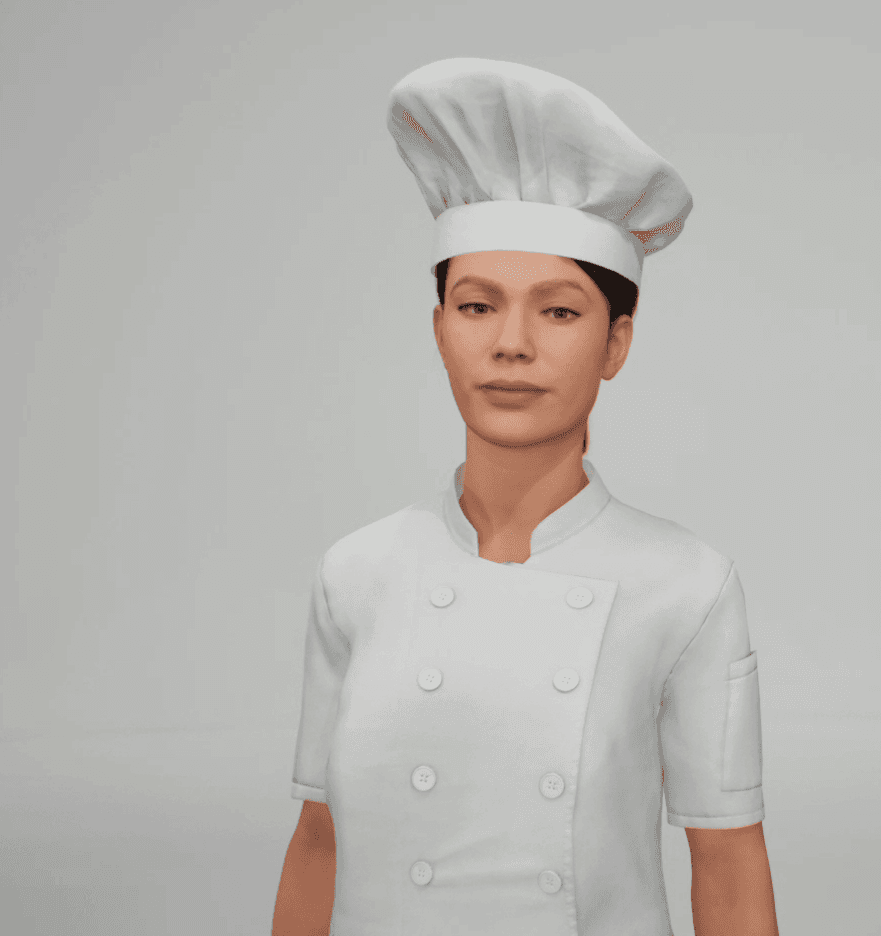
Introducing Madame Zott
Inspired by the character Elizabeth Zott from the TV Series "Lessons in Chemistry", unconventional and independent.
Personality
Madame Zott blends scientific precision with logic and direct manner. She frames cooking mishaps not as failure but as data points.
Encouraging experimentation
She pushes users to break rules like : I am putting cinnamon in my chili which I have never done before. Don’t be afraid to experiment
Explaining the Why
She explains the science “ When pie cools, the starch goes through the process called retrogradation where the molecules restructure into a crystalline form”
User Flow
The user journey is designed to be non-linear, encouraging both structured learning and open ended experimentation.
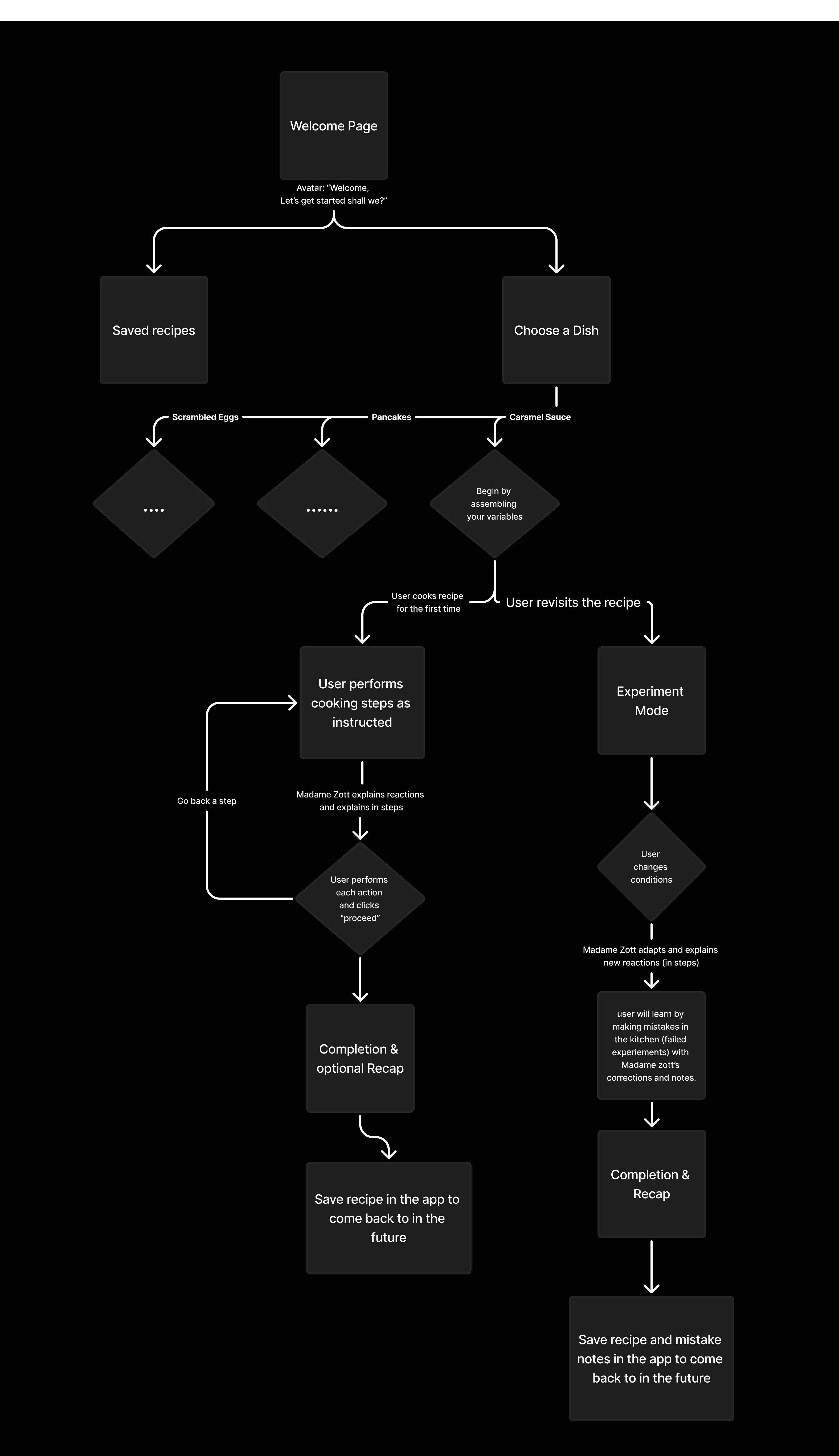
Sketch Wireframe
Step 1
The Welcome
The user enters a cozy, lab-like kitchen. Warm light and gentle ambient music set the mood. Miss Zott greets them: “Welcome to The Cooking Lab, where science meets flavor
Step 2
Cultural Transformation
The user selects from recipes like pancakes, caramel sauce, or masala chai. The surroundings transform, Indian recipes transport users to a sunlit Indian kitchen with the crackle of spices, while French desserts shift the space into a soft, pastel Parisian patisserie.
Step 3
The Interaction
Users perform cooking actions, mixing, heating, stirring using XR hand controls
Step 4
The 'Aha'! Moment
As the user performs an action, Madame Zott pauses to reveal the invisible. For Example, “See those bubbles? That’s carbon dioxide reacting with buttermilk
Step 5
Reflection
The session closes with Miss Zott asking, “What did you discover today?” The digital recipe book updates with new notes, insights, and visuals.
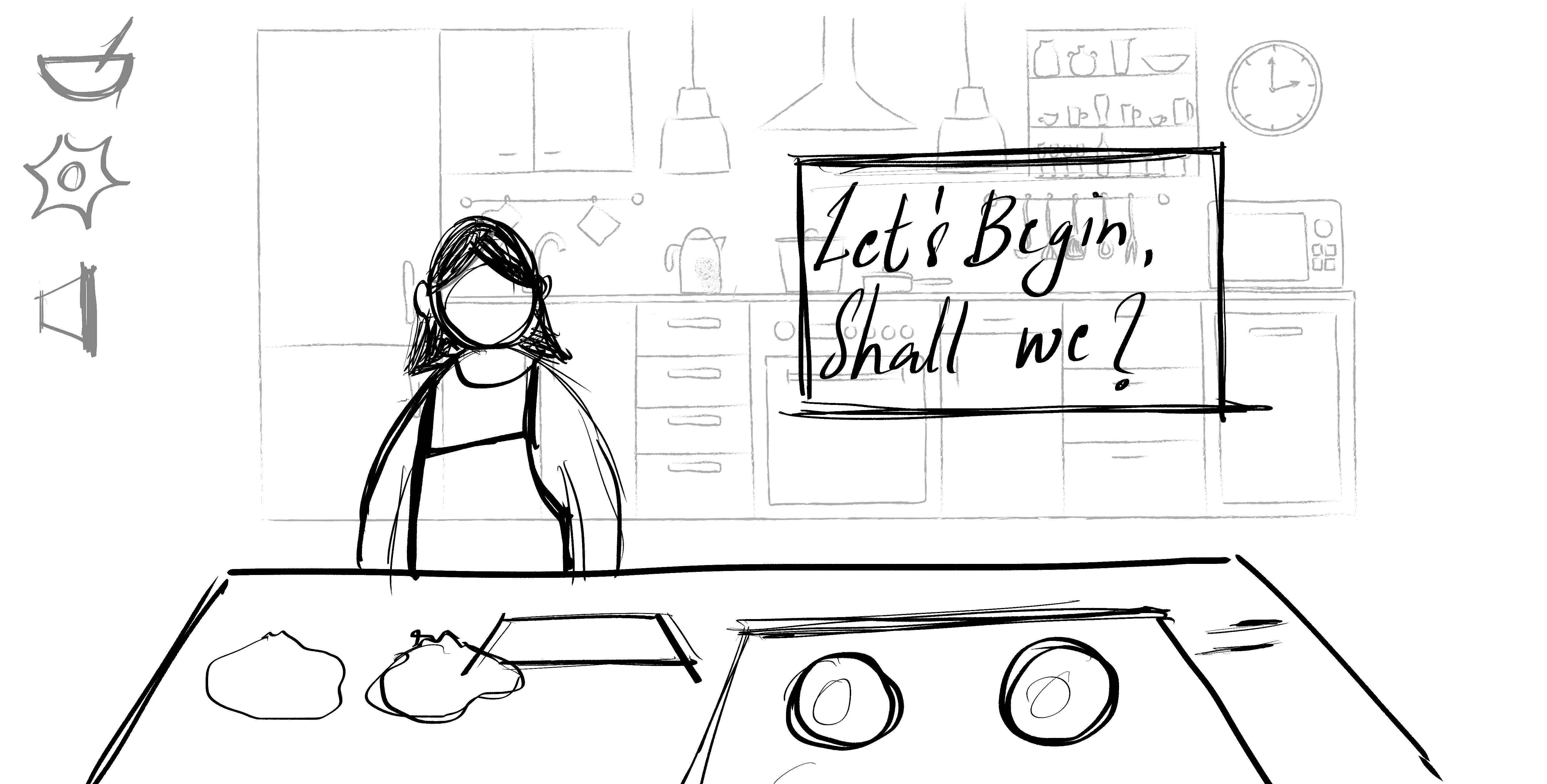
First Iteration
Putting it to the Test: Initial User Testing
With our “Happy path” defined we moved to development. Our first prototype focused purely on functionality, could users navigate the space, and understand their surroundings. Could Madame Zott talk, how can the user communicate with her?
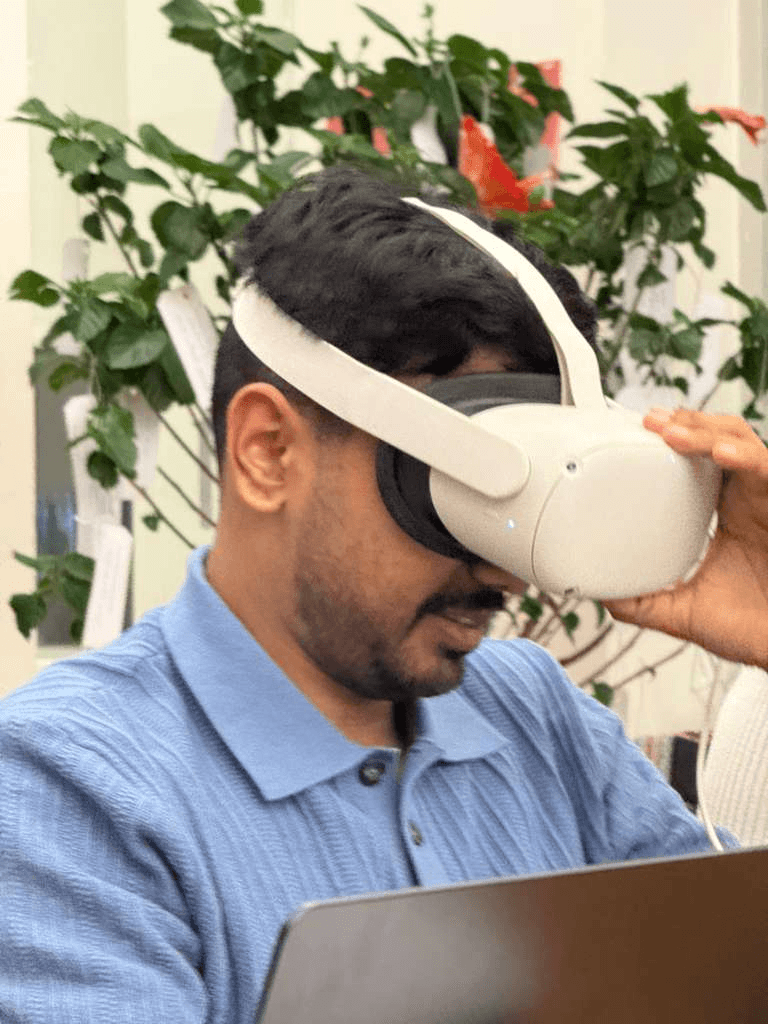
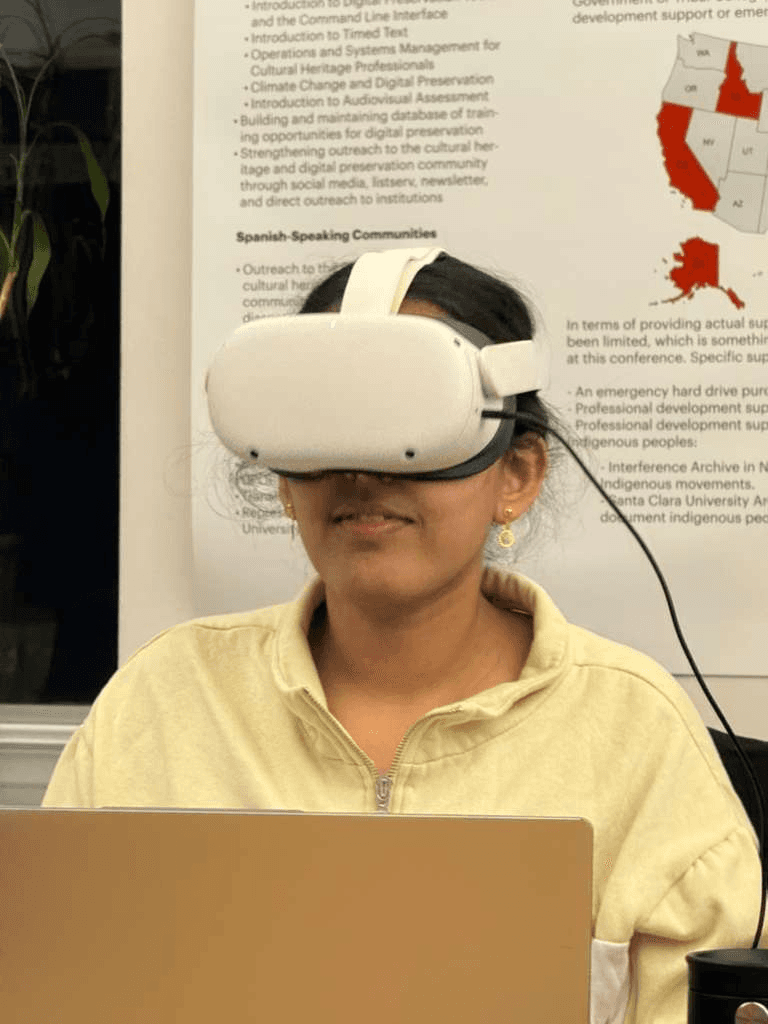
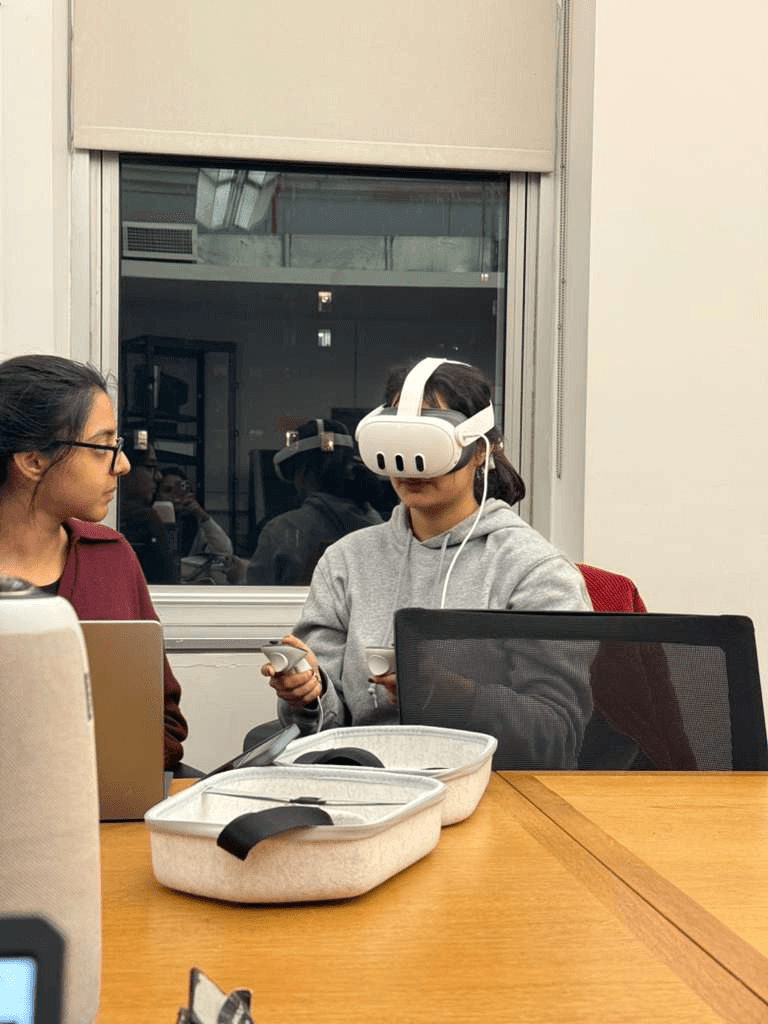
We invited friends and family to step into our virtual kitchen to find out.
The reality Check: While the environment was welcoming, the core interaction revealed friction points.
The “Butterfingers” Effect: Users found the interaction system clunky. Grabbing ingredients, holding tools, and performing actions like cutting was very difficult to control. The immersion was constantly broken by the struggle to simply hold an object.
NPC Unnaturalness: Early feedback indicated that Madame Zott’s movements and voice didn’t yet feel human enough to serve as a comforting guide, sometimes feeling more robotic than mentorship-oriented.
Challenges We Faced
One of our earliest and toughest hurdles was learning to collaborate effectively in Unity. The version control and push-merge setup proved far more complex than we had anticipated, which led to merge conflicts and hours of troubleshooting.
We encountered persistent XR interaction errors that prevented key features from working, and a deep dive into the documentation to debugging was required.
The file that we were using with version control had over 999+ errors, which took us forever to solve.
Importing the NPC avatar to Unity without disturbing any of the changes.
Final Iteration
Conclusion : Taste the Science, Discover the Story.
Kitchen Reactions is a testament to the power of XR to redefine education. It's a culinary journey where every ingredient has a story, every reaction is a lesson, and every dish is a triumph of both art and science. By making the invisible visible, the complex approachable, and the distant personal, we're not just teaching people to cook—we're teaching them to think, to explore, and to savor the incredible chemistry that makes our world, and our food, so wonderfully rich.